
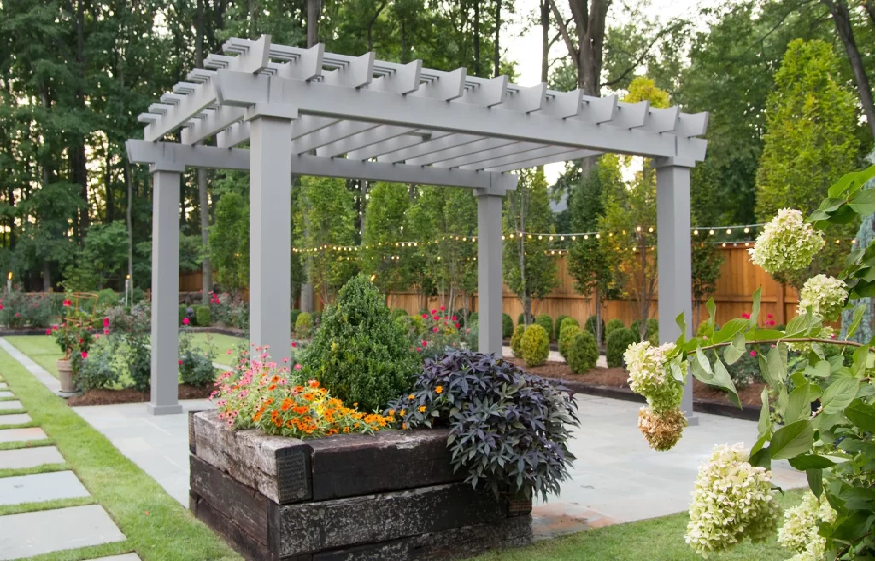

A pergola can change the feel of a backyard long before anyone notices its beams, finish, or lighting. Much of that effect comes from where it sits.
That decision gets interesting in Denver because residential yards vary so much across the city. An older home in Park Hill may have a deep lot, mature trees, and a detached garage at the alley. Around Washington Park, the house and garden may occupy much more of the available space. Newer homes can have large glass doors opening directly onto a patio, creating a strong connection between the kitchen and backyard from the start.
The most obvious location for a pergola is usually the existing patio. It is worth looking beyond that first answer. Moving the structure even a short distance can change how the yard is used, what you see from inside the house, and where people naturally gather.
Sometimes the Best Spot Is Right Outside the Door
There is a lot to be said for convenience.
If you carry dinner outside several nights a week, having the table close to the kitchen matters. The same goes for families who use the patio for coffee in the morning or step outside frequently while kids are playing in the yard. A pergola attached to or positioned close to the house can make that everyday transition feel natural.
The architecture deserves some attention here because the pergola becomes part of the rear elevation. Look at the windows above it, the height of nearby doors, and the roofline before deciding how tall the structure should be. From inside, check how much of the pergola will appear through the glass.
Read More: Houston Home Design Trends That Prioritize Everyday Living
Older Denver homes can make this especially interesting. A brick bungalow with a modest rear elevation has a different scale from a newer two-story home with a broad bank of windows. The pergola tends to feel more settled when its size responds to the house rather than stretching across every available foot of patio.
Close-to-the-house placement also makes electrical planning easier in many cases. Lighting, fans, or receptacles can be considered while the structure is being designed, keeping cords and later additions from becoming part of the finished view.
A Few Steps Into the Yard Can Change Everything
Some backyards get more interesting once you leave the patio.
You may have a mature tree farther out that creates a pleasant pocket of shade. Another part of the yard might catch a better breeze in the evening. On a deep Denver lot, the area near the back fence can feel surprisingly removed from the house, even though it is only a short walk away.
That creates an opportunity to treat the pergola as a destination.
A path becomes part of the experience. Planting can gather around the route, and the space beneath the pergola starts to feel distinct from the activity near the back door. This placement works especially well for lounge seating, a quiet conversation area, or a spot used after dinner when proximity to the kitchen matters less.
There is also a visual advantage. Looking across lawn and planting toward a pergola gives the backyard depth. From the structure, you gain a different view back toward the house and garden.
On a property with an alley-loaded garage, the pergola may even help make sense of the space between the house and rear accessory buildings. Instead of leaving the far end of the lot as leftover yard, the structure can give that area a reason to be used.
Placement Can Solve Privacy More Gracefully
Denver neighborhoods with mature trees can feel wonderfully established, although many homes still have clear sightlines into neighboring yards. New construction sometimes creates the opposite condition: young landscaping and second-story windows with very little screening between properties.
Pergola placement can help with privacy before extra walls or tall screens enter the conversation.
Positioning the structure near existing vegetation gives that planting more influence over the seating area. A tree beside one corner may interrupt a view from a neighboring window. Shrubs planted around the outside of the pergola can become part of the enclosure as they grow.
The orientation of the seating matters too. If one side of the property faces a neighboring patio and another looks toward a garden, turning the furniture toward the better outlook changes the experience considerably. The pergola establishes the area around that furniture and reinforces the direction you want people to face. Privacy tends to feel more comfortable when it comes from several layers of the landscape rather than one tall barrier.
The Middle of the Yard Is More Useful Than It Looks
There is a habit in residential landscaping of pushing structures toward edges. Patios go against the house. Sheds head for corners. Planting lines fences. On the right property, a pergola can occupy space closer to the middle of the yard and give the landscape a much stronger composition.
This works best when there is enough room to move around the structure comfortably. Planting can continue behind it, which creates a sense of depth instead of ending the view at the pergola. From one side, you may see the house framed through the posts. From another, the structure opens toward the lawn or garden.
Central placement can also divide a large yard into areas that feel related without requiring fences or walls. One side may remain open for play while the other becomes more garden-oriented. The pergola gives both areas a common reference point.
This approach tends to be overlooked because it requires more commitment than placing the structure against an existing patio. When the yard has enough room, it can produce a setting that feels much more intentional.
Denver Lots Bring Some Practical Limits Into the Conversation
Placement eventually has to move from ideas to a site plan.
Denver regulates accessory structures through its zoning and building systems, and the rules vary with the property’s zone district and the size and type of structure. The city advises applicants for new accessory structures to show lot lines, nearby structures, streets or alleys, and distances between the proposed structure and property boundaries on the site plan. A property survey may also be required when construction is proposed within three feet of a property line.
That makes the attractive corner near the fence worth checking before anyone gets too attached to it.
Denver also has areas governed by the current Denver Zoning Code and others that remain under Former Chapter 59 zoning, so assumptions based on another house across town can be unreliable. Historic districts and individually designated landmark properties can bring additional review into certain projects as well.
Read More: Sustainable Digital Signage: Green Solutions for Modern Businesses
Those requirements are one more reason to make placement an early conversation. Moving a pergola on paper is considerably easier than revising the plan after structural details and materials have been finalized.
Give the Best Part of the Yard a Reason to Be Used
The right location often becomes clear when you stop thinking about where a pergola usually goes and start paying attention to where you already like being.
Walk outside in the late afternoon. Notice which part of the yard feels comfortable and where you find yourself looking. Think about how far you are willing to carry a plate from the kitchen, where guests tend to gather, and which areas of the property rarely get used even though you like them.
Those habits tend to be really revealing over time.
For homeowners considering pergola installation in Denver, All Terrain Landscaping can look at the structure within the larger layout of the property, including circulation, planting, existing patios, and the relationship to the home. Placement becomes part of the design instead of a decision made after the pergola itself has already been chosen.
A few feet can determine if the structure becomes a place you walk past or the place you head toward when you step outside.