
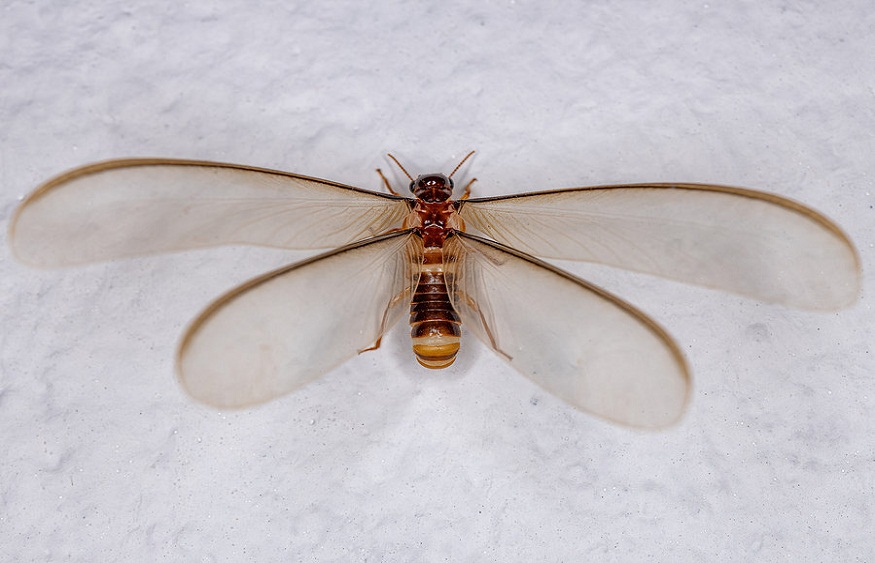

Seeing tiny flying pests moving into your Phoenix house in March is not a seasonal oddity; it is a threat. The presence of indoor termite swarms means that something much worse is already taking place behind your walls. The most destructive species are subterranean termites, which can be very active and reproducing long before you ever spot them in Maricopa County.
You can speak to experts at greenmangopest.com if you need help in getting rid of termites at your home. In this article, we will define what an indoor swarm actually is and what you should do about it immediately.
Why Termite Swarms Happen Inside Phoenix Homes
Termites swarm to reproduce. Mature colonies send off winged termites known as alates to fly out and create new colonies. This swarming season in Phoenix usually lasts from March to May, prompted by increasing daytime temperatures and residual moisture left over from the winter months. Typically, it is subterranean termites, the most widespread and damaging termite species in Maricopa County.
Read More : Termite Swarms Indoors in Phoenix – What It Says About Structural Infestation
Here is the important thing to remember: if you notice swarmers in your house, that means the colony is already inside your home. This is an outside colony looking for new homes. It is an inside job.
Indoor Swarm vs. Outdoor Swarm — What’s the Difference?
| Factor | Indoor Swarm | Outdoor Swarm |
| Where swarmers are found | Windowsills, floors, light fixtures | Yard, soil, tree stumps |
| What it indicates | Established a colony inside the structure | Ground colony nearby, not yet inside |
| Level of urgency | Immediate professional inspection needed | Monitor closely, take preventive steps |
| Common termite type (Phoenix) | Subterranean termites | Subterranean termites |
What an Indoor Swarm Actually Tells You About Your Structure
A pest sighting, such as an indoor swarm, is a diagnostic sign. Here is what it is communicating:
- The colony is mature. Swarmers are only made by a colony that has been there for at least 3–5 years.
- Entry likely happened long ago. In older Phoenix homes, entry points include foundation cracks as well as plumbing penetrations and wood-to-soil contact.
- Mud tubes could already be concealed. Look behind wallboard and in crawl spaces. They may not be visible, but they are there.
- Structural wood may be compromised. Moisture damage and internal hollowing could be seen in joists and beams.
- Swarmers have left, wings cast aside. If you see wings along baseboards or windowsills, the swarm has already hatched and might have hived up somewhere else in your home.
Areas in Phoenix Homes Most Vulnerable to Hidden Colonies
The soil composition of Phoenix differs from valley to valley, and that directly impacts how termites tunnel and move around. Soils heavily laden with clay in the West Valley tend to hold moisture longer, while sandy loam soils in the East Valley allow termites to move more quickly. These offer good cases for tunneling.
1. High-Risk Zones in Older Central Phoenix Homes (Pre-1990 Builds)
Older homes (before 1990) have wood framing, pier-and-beam foundations, and little or no original soil treatment. These structures provide termites with simple wood-to-soil contact. From the University of Arizona: 1 out of 5 Arizona homes will suffer from a termite infestation at some time, and older Central Phoenix buildings are much more susceptible.
2. New Construction Is Not Exempt – Mesa and Chandler Cases
All new constructions in Arizona are required to be treated for termites before construction. But these treatments only last for 5–8 years. Given Mesa’s and Chandler’s breakout suburbanization over the 2010s, many homes that were built in the early ’10s are creeping into that vulnerability period.
What Phoenix Homeowners Should Do Immediately After Spotting a Swarm
- Do not spray the swarmers. This will work to remove the visible insects you see, but not the colony.
- Take a photo of the insects and their location. This helps with species identification.
- Look along windowsills and on baseboards for wings.
- Walls or flooring adjacent to the swarm site should not be disturbed
- Call a licensed termite inspector. Always confirm that a pest control company holds a Branch 2 license for termite work, which is required in Arizona.
Read More : Are Mice Moving Into Your Missouri Springs Garage To Escape The First Frost?
Getting a Termite Inspection in Phoenix – What to Expect
The professional inspection includes all perimeter going out as part of the ground, attic access points, moisture readings, and mud tube detection. It is a legal requirement (ARS 32-2301) that licensed inspectors provide a written report describing findings. For example, Saela Pest Control employs inspectors who know Phoenix’s soil and building practices. And their reports do not just say yes/no, they map out the real extent of damage to help you know exactly what is ailing your site.